Why I built an AI receptionist instead of answering the phone
Because I was missing calls, and every missed call was a lead we might not get back.
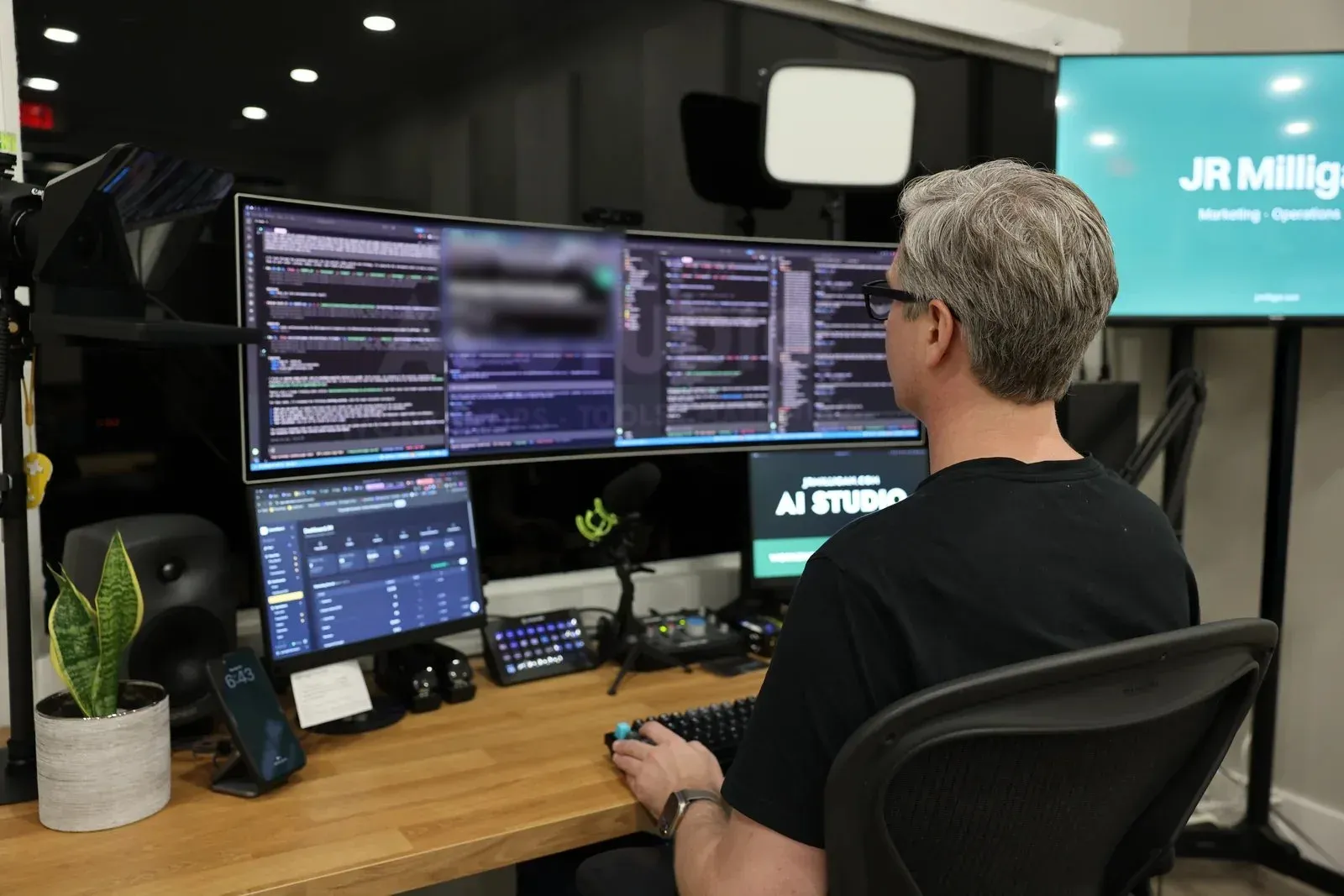
Everything I do is AI first and agent first. Most of my day I’m running several AI agents at the same time, some that I’m driving and some that start on their own, and that work takes deep focus.
A random phone call in the middle of it, when I’m on a deadline or mid-conversation with an agent, is extremely disruptive. So my phone is muted all the time, and I was missing calls for our AI studio. We were losing leads, and I knew right away I had to fix it.
Hiring a receptionist wasn’t the answer for me. A person can only answer during the day, when they’re in the office. And I wanted to push my own skills on something I knew a lot of other business leaders would want and need too.
In marketing, one of the golden rules is speed to lead: get back to a lead as fast as you possibly can. My rule of thumb is within 60 seconds.
The research points the same way. In a study of 1.25 million online sales leads at 42 US companies, firms that tried to reach a lead within an hour were nearly seven times as likely to qualify it as firms that tried even an hour later, and more than 60 times as likely as firms that waited a day or longer.
That study looked at web inquiries rather than phone calls, but a caller who gets voicemail is a lead left waiting too.
Voice AI changes that. You no longer have to rely on having enough people to answer the phone. A good agent can pick up, answer questions, check whether a caller is a real prospect, and take action, so the person on the other end feels heard, understood and taken care of.
So the long explanation is that I’m too lazy to answer the phone. The short one is that Millie solves a business problem and a personal one: I get to stay in deep focus for longer without losing leads.
What an AI receptionist does on a call
It answers right away, answers the caller’s questions, and can take them from the call all the way to a booked appointment.
Millie picks up within a second. She’s been trained on our website, plus other information I thought callers would need.
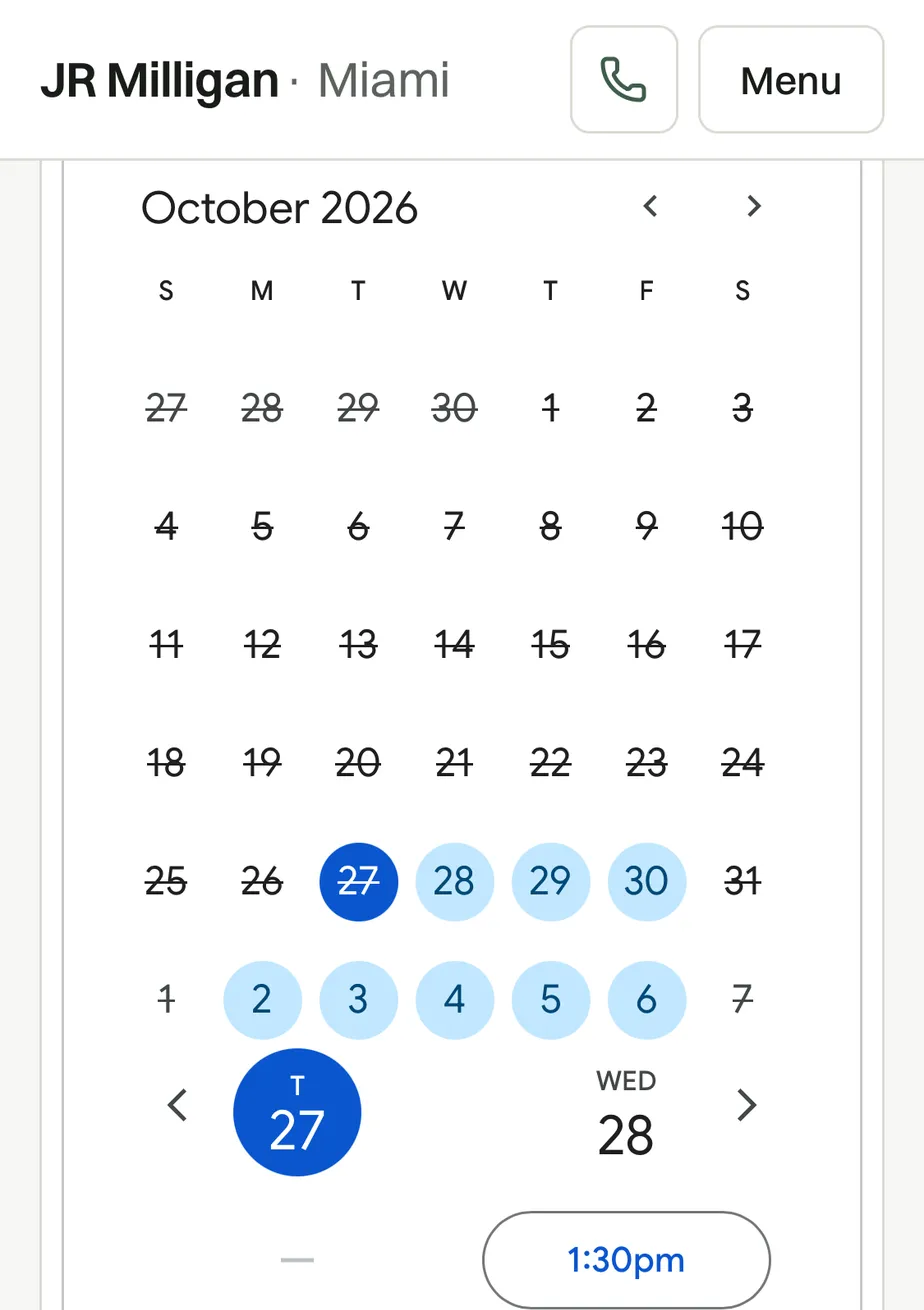
On top of that, we’ve given her what we call hands: things she can actually do, not just say. She can check the schedule, answer questions, send a text, send an email and reserve an appointment.
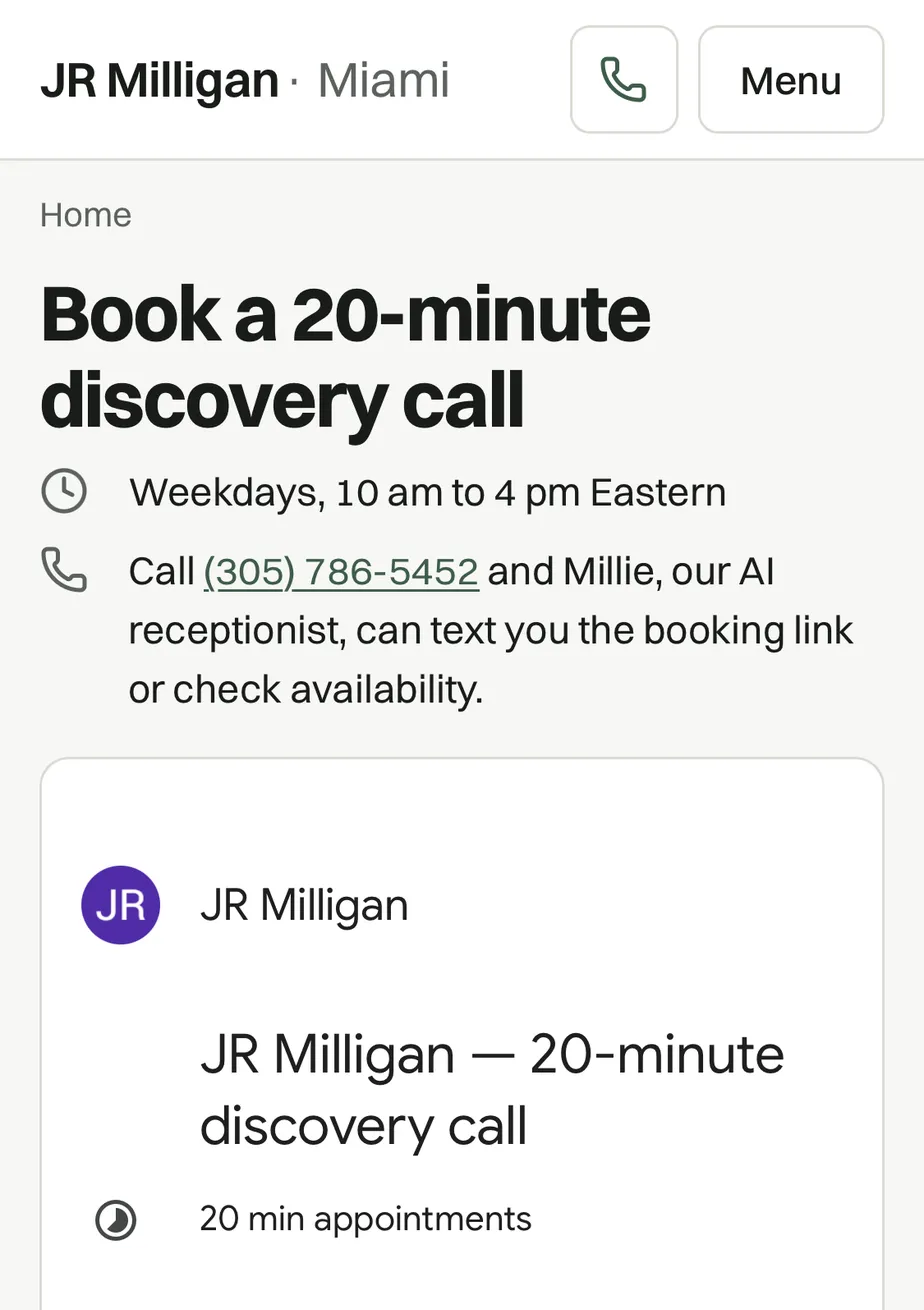
That covers what an inbound caller needs at the start: someone answers, listens to the question or concern, takes their information and moves them to the next step. Along the way she gives them what they need to know about whatever they’re interested in. Often that next step is time on the calendar with a real person.

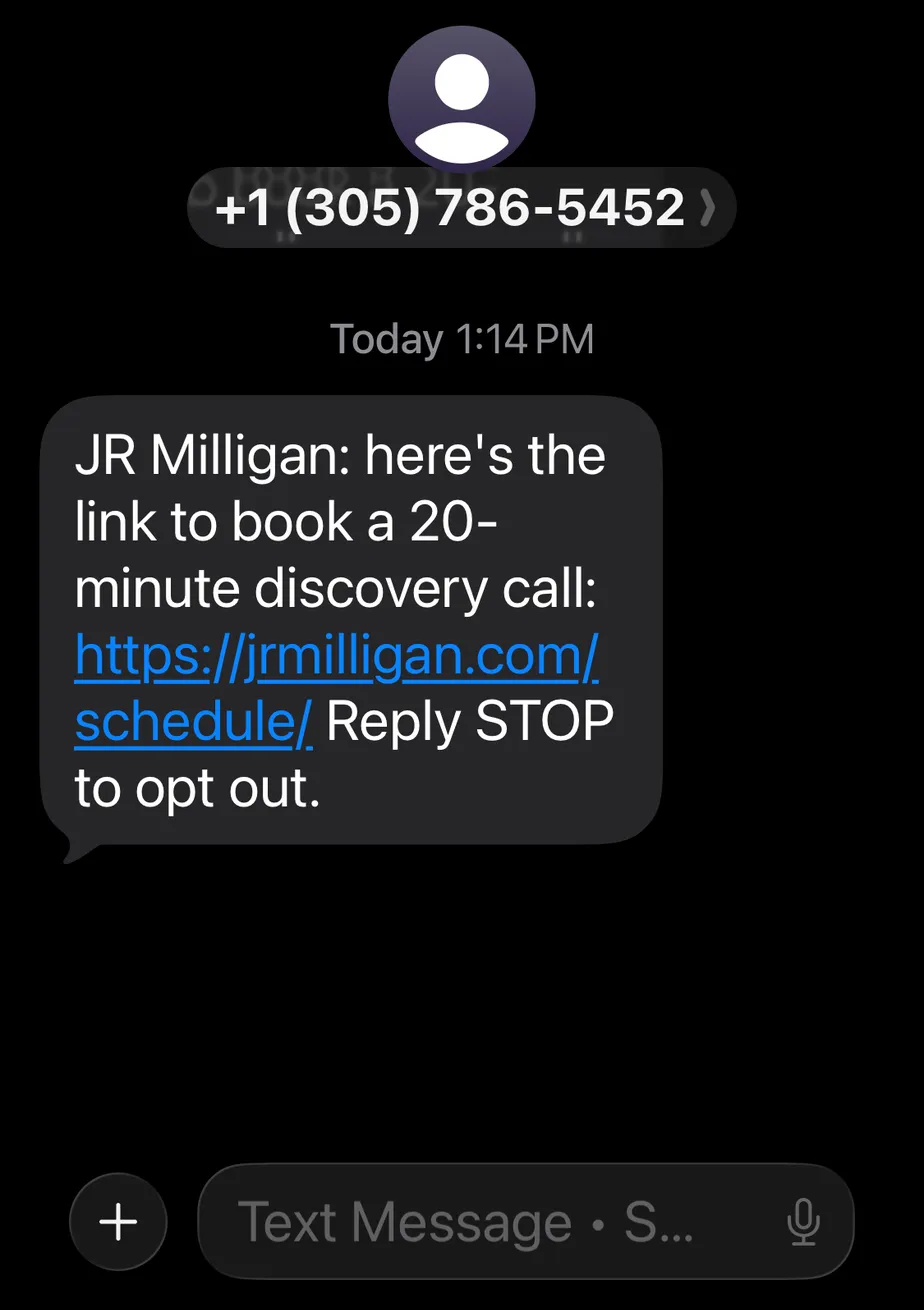
Then she follows up. After the call, Millie sends a text, so the caller knows this wasn’t an AI voicemail service. Something actually happened: their details went into our system, and time was reserved with a real person where both calendars lined up.
What real callers taught me
Real callers are far more random than any test you run yourself, and more accepting of a good voice agent than I expected.
When you build an agent, you’re focused on the job it’s meant to do. When you test it, you ask the narrow questions you expect people to ask.
Then we turned Millie on for live calls, and I was astounded by how random they were. One real caller asked Millie when the next lunar eclipse was going to be.
It made me chuckle, and it was a quick reminder that a production-ready agent has to be very well prepared, because it’s going to hear some weird stuff. It’s also why an agent needs maintenance and monitoring once it’s live, so it keeps handling new edge cases well as they come in.
The other surprise was the feedback. Prospects and clients immediately started asking how we could apply Millie to their businesses. And nobody, at least nobody yet, has been frustrated that they were talking to an agent.
Part of that is the cool factor. Part of it is a good, natural flow. People call with a problem or a question and they want an answer, or someone to help them solve it. When they’re heard and get a response right away, they appreciate it.
The very first real prospect who called didn’t realize Millie was an agent. She sounded that natural.
How the first real prospect’s call went
They clicked on our ad on Meta, looked around the website on their own and called. Millie booked them. Four days later I met them on Zoom, person to person, and they became a customer.
The best part is that the customer was happy with the experience. That’s a win-win-win: for Millie, for the customer and for the business.
When a human should take over
Whenever the caller needs one, so every voice agent needs a clear way to get someone to a real person.
There’s no way to anticipate every question a caller will ask, or every kind of caller and personality. Some people will want to speak to a human because they don’t trust AI. Some will have an emergency that needs to be solved right away. So the most important part is the handoff: a way out of the voice agent and to a real person when it’s truly needed.
Customers say the same. In a Gartner survey of 5,728 customers, 64% said they would prefer companies didn’t use AI for customer service, and their top concern was that AI would make it harder to reach a person.
A voice agent also sets expectations. When it tells a caller when someone will be free to help, the caller holds the business to that. So the agent has to be well connected to the business and its true schedule.
If the business then misses that time, it isn’t the agent’s fault. The business is accountable. For a service business, that means at a minimum the agent needs access to your calendar and your company’s policies.
Why a good voice agent is hard to build
Getting an agent to answer the phone is the easy part. Giving it hands and tuning it for real conversations is where it gets hard.
I’m a big proponent of building my own tools from scratch. That doesn’t mean everybody should, but it helps me really understand what’s being built and how it works.
Richard Feynman said it better. On his Caltech blackboard when he died in 1988 was the line “What I cannot create, I do not understand.”
I was elated at how easy the first step was. Getting an agent to answer the phone was easy, and I think that’s where most voice agents are today.
The complexity came when I gave Millie hands, so she could start taking action. Then came more: tuning her for edge cases and real-life conversations, which we’ve done successfully. It was not an easy task, and we had to overcome many challenges along the way. In my view, many voice agents on the market don’t have very capable hands.
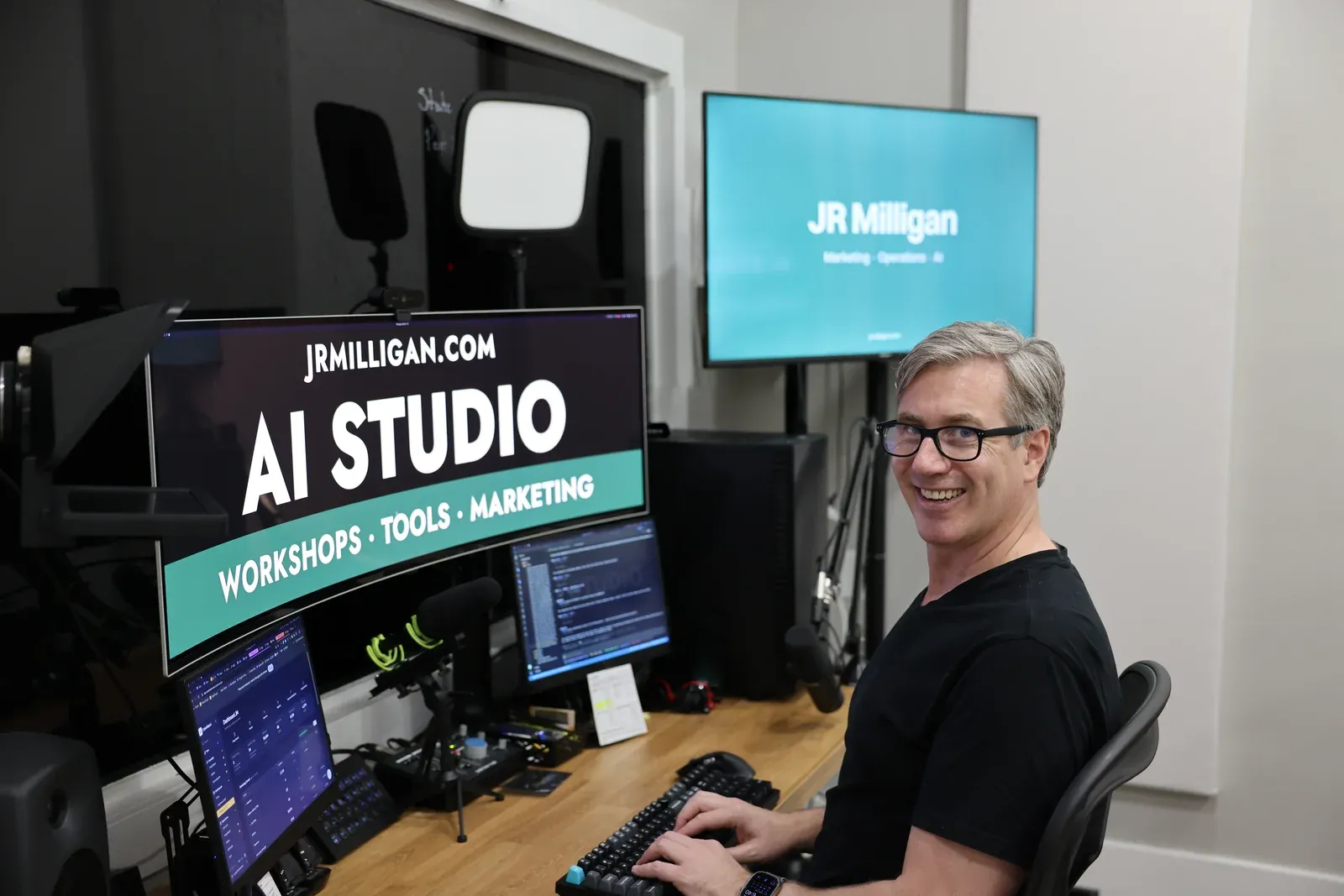
I’ve built a lot of agents now, without a coding or developer background, and voice agents are definitely harder than standard chatbots. They’re also much more costly to build: there’s more tooling, voice itself is more expensive, and there are multiple AI models at play all the time.
If you’ve never built an agent, build a simple one. It’s a great way to learn what AI can do, and it’s what our Build Your First AI Agent workshop is for.
A phone agent that talks to your real customers is a different job. It has to act on your systems, handle whatever a caller says, hand off to a person and be watched after it goes live. That’s the work I want to take off your plate.
Which businesses an AI receptionist fits
Any business where the person who should answer the phone is with a client, in a meeting or in deep focus.
Attorneys are always in meetings or in deep focus. Accountants are in a similar spot. Stylists, therapists and massage therapists have their hands busy with clients all day. They can’t get to the phone, and they can lose a lead just because they’re busy.
Field-service businesses have people out working and very busy schedules. For all of them, an agent like Millie greatly reduces the burden of administration, and it’s most useful when it’s fully connected to the business’s systems or CRM.
What it handles can be simple or sophisticated:
- “We’ll call you back when we free up, and we expect to be free at 3 PM today. Will that work for you?”
- Answering a question about a product or service.
- Booking a discovery call.
- Asking a few questions to tell whether the caller is a vetted prospect, a customer or a key person to the business.
- Recognizing a call from your number one customer and getting it to someone who can help, fast.
- Screening hot prospects from cold ones.
It’s also cost-effective. A receptionist is expensive, at a median of $38,010 a year in the US in May 2025 before benefits, and it’s often hard to keep one busy all day.
I see this as one of the biggest parts of the AI revolution, because it frees up a lot of people’s time and gives the caller or the lead confidence that somebody is there.
We build AI tools and agents for businesses; see AI tools and agents.
Sources
- James B. Oldroyd, Kristina McElheran and David Elkington, “The Short Life of Online Sales Leads”, Harvard Business Review, March 2011.
- Gartner, “Gartner Survey Finds 64% of Customers Would Prefer That Companies Didn’t Use AI For Customer Service”, press release, July 9, 2024 (survey of 5,728 customers, December 2023).
- U.S. Bureau of Labor Statistics, Occupational Outlook Handbook, Receptionists (2025 median pay $38,010 per year, May 2025).
- Caltech Archives, “Richard Feynman’s blackboard at time of his death”, 1988, Caltech Images Collection 1.10-29.